3,000 ft That was the altitude where the team believed the final drone flight would reveal nothing more than empty sky.
For a moment, everything seemed routine.
The drones climbed, the instruments scanned, the radar collected data.
Then someone pointed toward the screen.
Something back there.
The room immediately shifted.
Researchers leaned closer.
A few seconds later, the Doppler radar displayed a signal that nobody expected to see. What made the moment so unusual was not simply the appearance of an unidentified target. It was where that target appeared. For years, investigators at Skinwalker Ranch had reported strange anomalies in the same general area.
Rockets deviated from their intended paths. GPS systems reported impossible positions.
Drones lost communication. Lidar scans produced distorted data.
Again and again, different instruments appeared to encounter something they could not fully explain.
Now, for the first time, a Doppler radar seemed to be detecting something there as well.
And if that signal was real, the investigation might be entering an entirely new chapter.
This is The Secret of Skinwalker Ranch season 7 episode 11.
The episode is titled On the Radar.
According to the official description, the team uses Doppler radar to study the mysterious phenomenon known as the bubble. Only to discover new unexplained activity hiding in plain sight.
At first glance, that description sounds simple, but it raises a fascinating question. Why Doppler radar after years of rockets, drones, GPS sensors, thermal cameras, lidar systems, and ground penetrating radar? Why introduce an entirely different technology now?
To understand that question, we need to go back. Not to the beginning of the ranch, only to the pieces that matter.
Over the last several seasons, investigators have repeatedly described an invisible region in the sky. They call it the bubble.
The name sounds simple. The evidence
behind it is not.
One of the earliest clues came from rocket experiments. Researchers launched instrumented rockets through areas where they believed anomalies might exist.
Some flights behaved normally. Others did not.
Several rockets appeared to change direction unexpectedly. In some cases, their trajectories became difficult to explain using ordinary flight behavior alone.
One event could be dismissed as equipment failure. Two might be coincidence. But the anomalies continued.
Then another detail emerged. Researchers began noticing unusual GPS behavior. In one experiment, instruments reported altitude changes that should not have been possible. Devices that remained physically stationary appeared to move in digital space.
The equipment had not changed position.
The data had.
One explanation was satellite error.
Another was temporary signal interference. Both are known phenomena.
Yet the same kinds of anomalies appeared again and again.
Then came lidar. Lidar works differently from GPS.
>> [music] >> Instead of relying on satellites, it builds precise three-dimensional maps using laser measurements. In theory, it should provide an independent method of observation.
But investigators noticed something unusual.
Different lidar systems appeared to experience distortions in the same region where GPS irregularities had been reported. The evidence did not provide an answer. It created a larger question.
Why were completely different technologies producing unusual results in roughly the same area.
>> That was not the only anomaly. Drone experiments introduced another layer to the mystery.
Multiple flights encountered communication issues.
In some cases, drones appeared to lose control signals while approaching specific locations.
Then, after moving away from those areas, communication returned.
Researchers could not conclusively determine the cause.
Signal interference was one possibility.
Technical malfunction was another, yet the pattern continued, and patterns are difficult to ignore, especially when they emerge across different systems.
Then investigators turned their attention toward the Homestake area.
There, some of the most unusual observations began to accumulate.
Thermal cameras recorded unexpected heat signatures. Radio communications failed.
Electronic equipment malfunctioned.
In one experiment, a drone reportedly lost control while entering a region associated with the bubble.
As before, the observations raised more questions than answers.
No instrument had actually seen the bubble.
Researchers were only observing effects, like seeing leaves move without seeing the wind itself.
The phenomenon remained indirect, invisible, inferred.
And that may be exactly why episode 11 is so important.
Because Doppler radar approaches the problem from a completely different angle.
Unlike GPS radar, it does not depend on satellites.
Unlike lidar, it does not rely on laser mapping.
Unlike cameras, it does not require visible light.
Instead, Doppler radar transmits radio waves and analyzes how those waves return.
Meteorologists use it to track storms.
Engineers use it to measure motion.
Air traffic systems use related radar technologies to monitor aircraft. The principle is well understood, which makes its arrival at Skinwalker Ranch particularly interesting.
If GPS reports an anomaly, critics can question satellite data. If a camera captures something unusual, skeptics can question the image.
If a drone malfunctions, observers can point towards software failure.
But if Doppler radar independently detects unusual activity in the same area, the conversation changes.
Not because it proves anything extraordinary, it does not, but because it introduces another measurement system into the investigation, and independent measurements matter.
Especially when they begin pointing toward the same location.
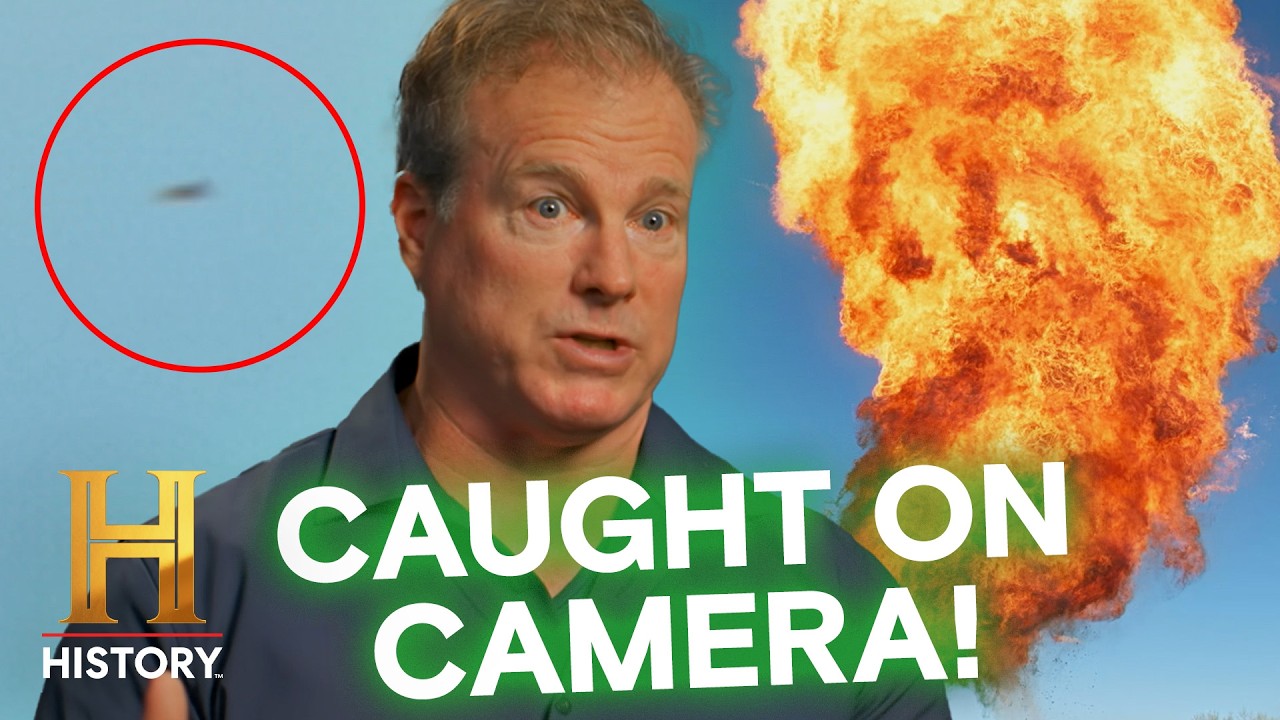
Then another detail emerged. The limited information released before the episode aired hinted that the radar experiment might reveal more than researchers expected. According to the available preview information, drones were launched to scan not only inside the bubble, but also thousands of feet above it. The altitude eventually reached approximately 3,000 ft. At first, the operation appeared straightforward.
Collect data, monitor conditions, compare readings.
But then, the atmosphere changed.
Observers noticed something.
A target appeared.
One team member pointed it out.
Another confirmed it.
Attention immediately shifted toward the radar display.
Moments later, the phrase that caught everyone’s attention was spoken.
An unidentified flying object. Now, it is important to be careful here.
The available footage is extremely limited.
Viewers have only seen a few seconds.
There is no complete context, no raw radar data, no detailed analysis, no confirmed explanation.
All we know is that investigators appeared surprised by what they were observing, and that reaction alone raises an intriguing possibility.
What exactly did the radar detect?
A conventional object, an atmospheric effect, a radar reflection, or something connected to the same mystery that has challenged investigators for years? At this point, nobody knows.
But what happens next may be even more important than the initial detection itself.
Because the real mystery is not the object.
The real mystery is whether the radar is seeing the same invisible puzzle that every other instrument has been struggling to understand.
And if it is, then the investigation may be closer than ever to identifying what has been hiding inside the bubble. The first question was obvious.
What exactly was the radar looking at at this stage?
There are no public data sets that allow independent verification.
No detailed radar images have been released.
No technical report has been published.
That leaves investigators and viewers with observations rather than conclusions.
And in scientific investigations, observations are only the beginning.
One possible explanation is surprisingly ordinary.
Radar systems are not perfect.
They can detect birds, insects, weather formations, temperature inversions, or unexpected atmospheric reflections.
Under certain conditions, radar waves can bounce in unusual ways and produce returns that appear confusing at first glance.
Engineers who work with radar encounter these situations regularly.
From that perspective, an unidentified radar target does not automatically imply an extraordinary object. It simply means the system detected something that has not yet been identified.
That is an important distinction.
Scientific investigations become stronger when ordinary explanations are examined before extraordinary ones.
Another explanation focuses on the equipment itself.
Complex field experiments involve multiple sensors operating at the same time.
Electronic interference between devices is always a possibility.
Software processing errors can also create misleading visualizations.
Synchronization issues between instruments sometimes generate confusing results that disappear once the raw data is analyzed.
Every experienced researcher understands this.
That is why repeated testing is essential.
But then another question appears.
If the radar detection eventually turns out to be nothing more than a technical artifact, why did it occur in the same region where previous anomalies had already been reported?
That coincidence deserves attention.
Not because it confirms anything unusual, but because it fits an existing pattern.
Patterns are where investigations become interesting.
One unusual event proves very little.
Two similar events invite comparison.
Several independent observations begin to form a hypothesis. Throughout recent seasons, researchers have repeatedly described the same section of sky.
Different experiments, different equipment, different objectives.
Yet the location keeps returning.
A rocket changes direction, a drone loses communication, GPS reports impossible measurements, lidar data appears distorted.
Now radar seems to detect an unidentified target in that same general area.
Individually, each observation can be questioned.
Collectively, they become more difficult to dismiss as isolated accidents.
That does not make the mystery solved.
It makes the mystery larger. One explanation argues that investigators are simply concentrating their experiments within a limited area of the ranch.
If most testing occurs there, then naturally most anomalies will also be reported there.
This is a reasonable argument.
Another theory suggests something different. Perhaps multiple technologies are responding to the same environmental condition. Not because the condition is extraordinary, but because it influences different measurement systems in different ways.
If such an environmental factor exists, identifying it would become one of the most important scientific questions raised by the investigation. Except there is another detail that neither explanation fully addresses.
Researchers have often described the bubble as something that is not directly visible.
Its existence has largely been inferred through its apparent effects on instruments.
>> [music] >> That distinction matters.
Imagine standing outside on a calm day.
You cannot see the wind itself. You only notice leaves moving across the ground.
For years investigators have been studying moving leaves.
Now they’re asking whether they can observe the wind directly.
That possibility may be the real significance of episode 11.
Perhaps the unidentified target is not the central story at all.
Perhaps the real story is whether Doppler radar can detect an environmental feature that previous instruments could only suggest indirectly.
If that is the objective, then the investigation has quietly shifted from collecting anomalies to testing a specific hypothesis.
And that represents an important change in methodology.
Scientific investigations progress when questions become more focused. Early experiments often ask whether something unusual exists.
Later experiments ask how it behaves.
Eventually researchers attempt to measure it directly.
Whether that progression succeeds remains uncertain, but the direction of the investigation appears to be changing.
Then, another connection becomes impossible to ignore.
Many of the earlier anomalies involved measurement systems that operate using very different physical principles.
GPS depends on satellite timing. LIDAR measures reflected laser pulses. Thermal cameras detect infrared radiation.
Radar uses radio waves.
These technologies are fundamentally different.
If several independent systems continue producing unusual observations in the same region, researchers naturally begin asking whether they are responding to one underlying cause, rather than several unrelated ones.
That question remains unanswered, but it is a scientifically reasonable question to ask.
It also explains why episode 11 has attracted so much attention before its release.
This is not simply another experiment.
It appears to be an attempt to compare years of previous observations against an entirely new measurement technique.
If the radar detects nothing unusual, that result would still be valuable.
Negative results eliminate possibilities. They force investigators to reconsider earlier assumptions.
If the radar does detect something unusual, then another independent data set enters the discussion.
Either outcome contributes information.
That is how real investigations move forward. Not through dramatic conclusions, but through careful elimination of possibilities.
The discussion within the research community reflects that balance.
Some observers are optimistic. They believe Doppler radar offers a more objective way to examine the bubble than several earlier experiments, because radar operates independently from GPS and optical imaging.
They hope it can either confirm or challenge previous observations.
Others remain cautious.
They point out that only a very small amount of information has been released publicly.
Without complete footage, technical specifications, calibration data, and raw measurements, any interpretation remains speculative.
Both perspectives are reasonable.
Both emphasize evidence over assumption.
Perhaps that balance is what makes this investigation so compelling.
Great mysteries grow from persistent small observations that form an undeniable pattern for years.
Rockets, GPS, lidar, drones, and now Doppler radar have each revealed a different fragment of a much larger puzzle.
No single instrument explains the nature of the bubble or proves anything extraordinary.
Yet together, these isolated anomalies keep pointing investigators toward the exact same question. Why does one specific region of Skinwalker Ranch consistently produce results that demand further exploration?
Episode 11 may not answer that question, but simply refining it is often more valuable than rushing toward an uncertain conclusion.
Every serious investigation eventually prioritizes gathering evidence over defending a theory.
When the episode airs, the radar target might have an ordinary explanation.
Or it could open an entirely new research direction. Instead of reaching an end, the team has reached a new beginning.
After years of deploying various sensors, researchers are no longer asking if strange anomalies occur.
They’re asking whether all these separate observations have been pointing toward the exact same phenomenon from the very beginning. And what has been waiting inside the bubble all along?