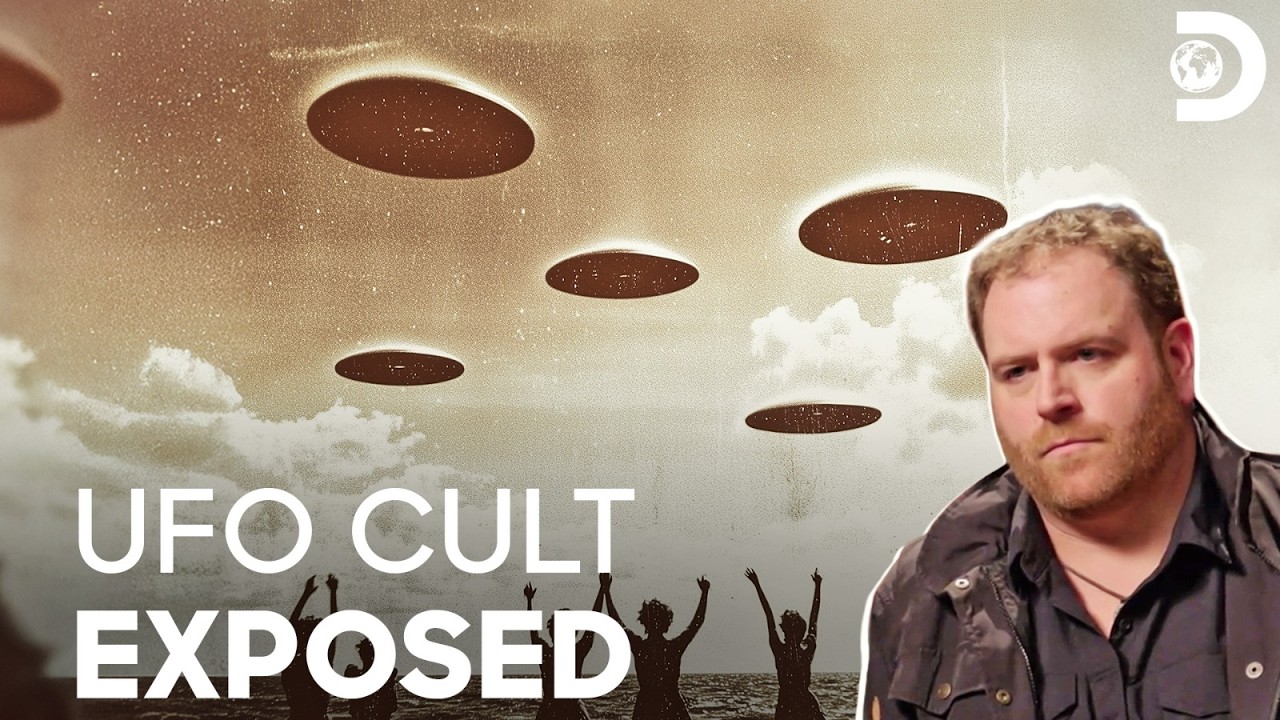
In the rolling hills of Nakhon Sawan province, about three hours north of Bangkok, lies a modest peak that has earned the nickname “Thailand’s Area 51.” Khao Kala, a forested hill overlooking sugarcane fields and the crocodile-haunted waters of Bueng Boraphet Lake, draws pilgrims not for its natural beauty or Buddhist statues, but for something far more extraordinary: alleged encounters with extraterrestrial beings. This is the heart of one of Southeast Asia’s most intriguing UFO hotspots, where meditation, telepathic messages, and bright lights in the sky blur the lines between spirituality, faith, and the unexplained.
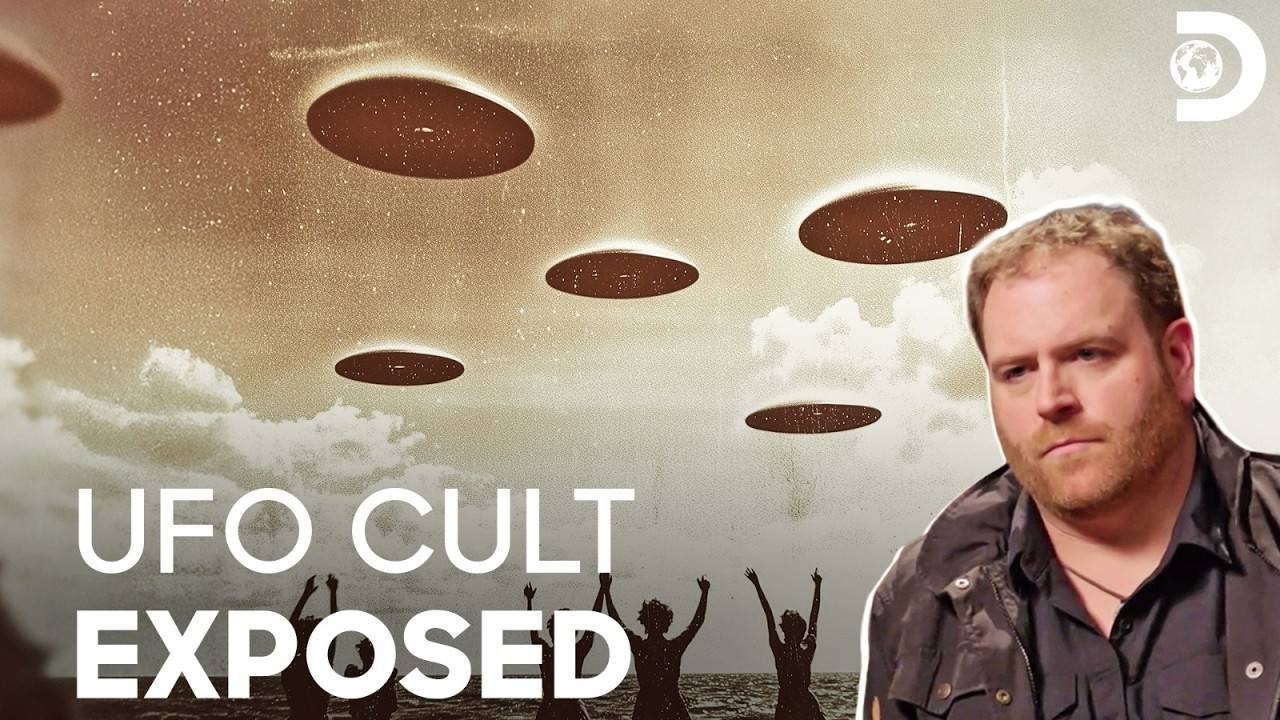
The story captured global attention through expeditions like those featured in Expedition X, where investigators Josh Gates, biologist Phil Torres, and paranormal researcher Jessica Chobot ventured into this enigmatic world. Their episode dives deep into claims of alien communication, warnings of global catastrophes, and a unique fusion of Buddhism and ufology that has sustained a dedicated community for decades.
Origins of the Phenomenon
The modern saga of Khao Kala began in the late 1990s with Sergeant Major Cherd Chuensamnaun, a retired Thai military officer. In December 1997, Cherd claimed to have established contact with extraterrestrials through meditation on the hill, which believers describe as a “jumpgate” or portal. He founded the Khao Kala Group (or Kaokala UFO Group), asserting that the site served as a landing point or communication hub for advanced beings.
After Cherd’s passing, leadership passed to his daughter, Ajarn Wassana Chuensumnaun, and associates like Somjit Raepeth. The group believes they communicate with beings from planets such as Pluto and “Loku,” often described as silver-skinned, talkative entities who impart Buddhist-inspired wisdom. These messages reportedly include teachings on morality, environmental warnings, and predictions of disasters—like links to the 2011 Japan earthquake and tsunami.
What sets Khao Kala apart from typical UFO lore is its deep integration with Thai Buddhism. Believers argue that Thailand’s strong Buddhist heritage makes it especially attractive to benevolent aliens who share similar values of peace and enlightenment. Gatherings often involve meditation sessions near large Buddha statues atop the hill, where participants report hearing alien voices in their minds or witnessing orbs and craft hovering overhead.
Life at the Hotspot
Visitors to Khao Kala describe a surreal scene. The hill offers panoramic views of flat farmlands below, where witnesses claim to have seen aliens disembark from spacecraft, walk around briefly, and then vanish in a puff. At night, bright lights dart across the sky or hover silently. The group has organized camps, festivals, and even received some government attention, including funding for events that once featured a metallic UFO structure.
In one notable development, the area hosted what was billed as Asia’s first UFO music festival, further cementing its reputation. Local authorities have at times tried to curb large gatherings due to the site’s status as a protected forest, but interest persists. A recent Thai film titled Khao Kala (2026), which premiered at Cannes, dramatizes these events through nine mysterious incidents, blending documentary-style footage with narrative to explore the debate between mass delusion and genuine phenomena.
For Expedition X investigators, the site presented a rich case study. Josh Gates dispatched Phil Torres and Jessica Chobot to immerse themselves in the community. They observed meditation sessions, interviewed core members, and set up equipment to capture potential evidence. Reports from the show highlight claims of telepathic conversations and UAP (Unidentified Aerial Phenomena) sightings, raising questions about whether these experiences stem from genuine contact, psychological factors, cultural belief systems, or something more prosaic like misidentified aircraft, drones, or natural lights.
Scientific and Skeptical Perspectives
Skeptics point out the lack of verifiable physical evidence. No conclusive photos, videos, or artifacts have emerged despite decades of claims. Critics suggest confirmation bias plays a role: in a meditative state atop a remote hill, pareidolia (seeing patterns in randomness) and expectation can easily transform stars, satellites, or weather phenomena into alien visitations. The fusion of spirituality and UFOs echoes global New Age movements, where belief provides community and meaning in an uncertain world.
Biologist Phil Torres, in the Expedition X context, likely brought a scientific lens—examining environmental factors, potential wildlife explanations for ground sightings, or psychological aspects of group experiences. Meanwhile, Jessica Chobot’s paranormal expertise would probe the sincerity of witnesses and any anomalous data from their investigations.
Yet, the persistence of reports is noteworthy. Khao Kala has been covered by outlets like CNN, The Wall Street Journal, and Lonely Planet, drawing international curiosity. Some locals remain skeptical, viewing the hill as a quiet spot turned tourist curiosity, while others swear by their experiences.
Government involvement adds another layer. Early reports suggest Thai officials engaged with the group, perhaps seeing cultural or tourism value. However, tensions arose over environmental protection, leading to occasional restrictions. The construction of a UFO monument funded in part by public resources highlights the unusual intersection of folklore, faith, and bureaucracy in Thailand.
Broader Context in Global UFOlogy
Khao Kala fits into a larger pattern of “contactee” movements worldwide, from the 1950s California cults to modern UAP hearings in the U.S. Congress. Unlike crash-retrieval narratives or military encounters, Khao Kala emphasizes peaceful, ongoing dialogue—aliens as spiritual guides rather than invaders. This Buddhist-inflected approach resonates in Thailand, where over 90% of the population practices Theravada Buddhism.
The site’s proximity to water (the lake as a potential portal) and its topography (surrounded by mountains creating natural “bays” for sightings) mirror other global hotspots like Skinwalker Ranch or Hessdalen Valley, where geology and atmosphere might contribute to unusual light phenomena.
Recent years have seen renewed interest, fueled by global UAP disclosure efforts and social media. Vloggers and tourists continue to visit, sharing personal stories that keep the mystery alive. The 2026 film and Expedition X episodes amplify its profile, inviting new generations to ponder: Are we alone, or do benevolent beings watch over us from the stars?
The Enduring Enigma
As night falls over Khao Kala, the hill grows quiet save for the occasional hum of insects and distant water. Believers settle into meditation, eyes closed, minds open to voices from beyond. Skeptics see a beautiful but ordinary landscape shaped by human longing. Investigators like those on Expedition X walk the line between empathy for the faithful and rigorous inquiry.
No definitive proof has emerged, yet the Khao Kala mystery endures because it speaks to universal questions: What lies beyond our understanding? Can science and spirituality coexist in explaining the unknown? Whether extraterrestrial portal, cultural phenomenon, or something in between, the hill continues to draw seekers—reminding us that in the vast universe, wonder often thrives where evidence is elusive.
Thailand’s Khao Kala stands as a testament to the power of belief. In an era of satellites and advanced telescopes, a small hill in Nakhon Sawan keeps the dream of contact alive. As Expedition X and similar explorations show, the real journey may not be finding aliens, but understanding why we so desperately seek them.